Using events as a business growth strategy is becoming a priority for many organisations. But not every event delivers the same level of impact.
Many feel successful on the day, yet struggle to show what they actually contributed once they’re over.
In practice, the difference usually comes down to how the event was planned. Not just the logistics, but the thinking behind it.
Across the UK events industry, there’s been a clear shift towards more outcome-focused planning. Less emphasis on attendance alone, and more focus on the quality of conversations, connections and results that follow.
The events that deliver real value tend to share a few key elements.
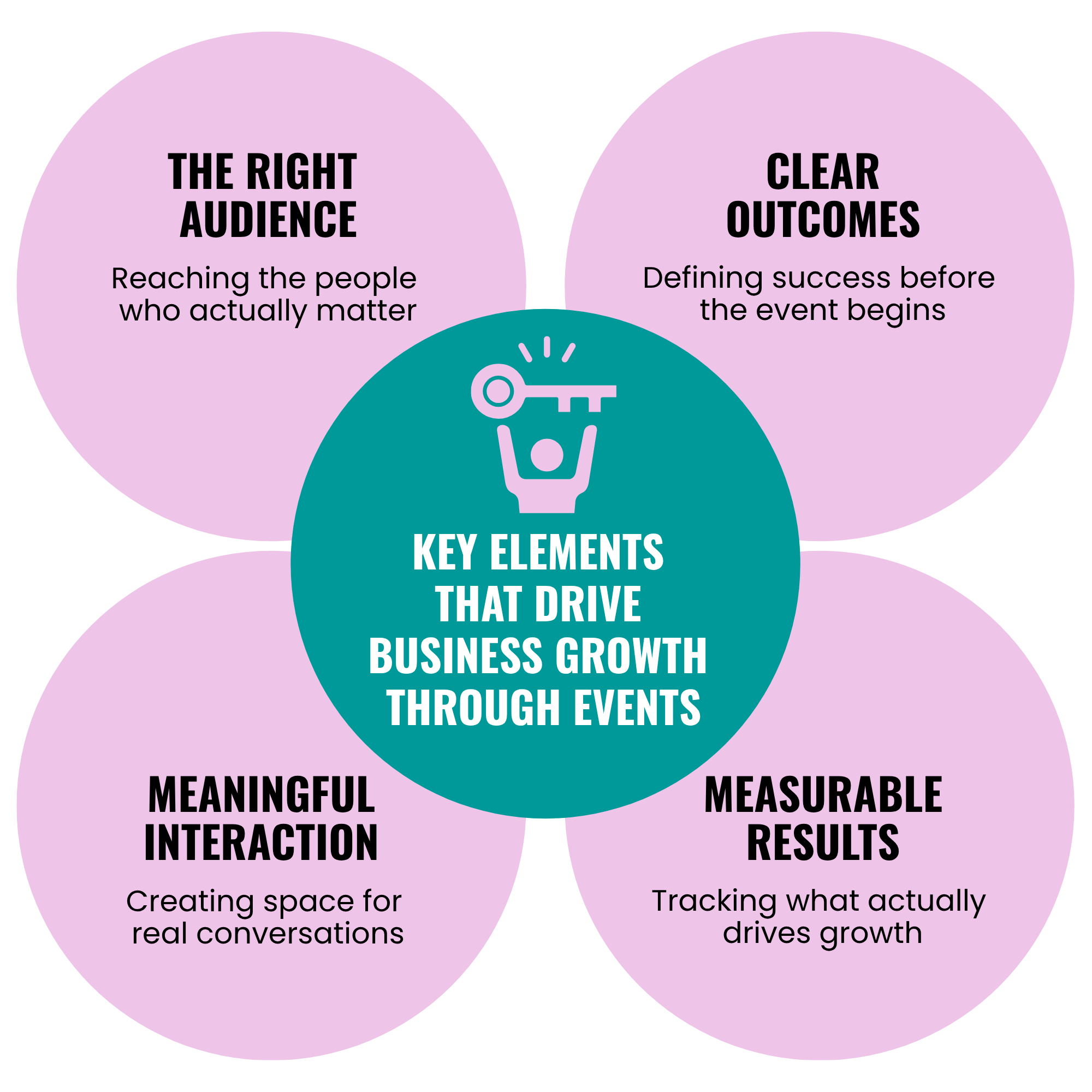
4 Key elements of events that drive business growth
Events that generate real business outcomes rarely succeed by chance. They are usually built around a clear strategic foundation.
Four elements consistently appear in successful strategic event marketing.
1. THE RIGHT AUDIENCE
Successful events begin with a clear understanding of who they are designed for.
Instead of trying to appeal to everyone, effective events focus on a defined group of professionals whose interests align with the event’s purpose.
For example, a smaller niche conference with highly relevant attendees can be far more valuable than a large, general trade show.
This clarity helps improve:
- marketing relevance
- event lead generation
- event audience engagement
2. CLEAR OUTCOMES
Growth-focused events define success before the event even begins.
Rather than focusing only on attendance numbers, organisers define outcomes such as:
- partnerships formed
- new leads generated
- new audiences reached
This ensures the event is working towards something meaningful, not just filling a room.
3. CREATING OPPORTUNITY FOR REAL INTERACTION
The structure of the event has a direct impact on its value.
Events designed around conversation, collaboration and shared learning tend to create stronger relationships and more useful outcomes.
Examples include:
- roundtable discussions
- networking formats designed for interaction
- workshops or collaborative sessions
These formats create space for real engagement, not just passive attendance.
4. MEASURABLE RESULTS
Success should be measured by impact, not just footfall.
Marketing teams are expected to demonstrate how events contribute to business growth using clear practical metrics.
Common metrics include:
- registrations and attendance rates
- lead quality and follow-up conversations
- session engagement and participation
- post-event content downloads or interactions
Looking beyond the event itself
One of the biggest shifts in event marketing today is the move towards measuring what happens after the event, not just during it.
Businesses want to understand how events contribute to growth beyond the day of the event itself.
This includes evaluating:
- the quality of leads generated
- the strength of new professional relationships
- how attendees engage with post-event content
- how events support wider event conversion strategies
From one-off events to ongoing growth
Organisations that see the greatest long-term impact from events rarely rely on a single conference or gathering.
Instead, they build a more consisstent appraoch where events support their wider marketing activity.
This might include:
- running a series of smaller, focused events
- building professional communities around shared interests
- creating content that continues the conversation between events
- nurturing relationships that began during the event
Over time, events stop being isolated campaigns and start playing a more consistent role in business growth.
This is where their real value begins to build.
Planning an Event?
If you’re thinking about how your next event can support your wider business goals, the Force 4 Events team can help you put the right strategy in place from the start.
Love what you’re reading? Let’s connect on LinkedIn
Ready to plan your next impactful event? Let’s talk about how we can help you increase registrations, generate leads and build events that truly matter.
How to choose the right awards for your business
Winning an award can be a powerful way to build credibility, raise your profile and create new...
Why awards matter for business growth.
Most businesses spend a lot of time thinking about how to become more visible. How do we reach...
Organic social media vs paid ads: What Actually Drives Event Registrations?
You’ve secured the venue. The speakers are confirmed. Registration is open. Now comes the real...