You’ve secured the venue.
The speakers are confirmed.
Registration is open.
Now comes the real challenge: getting the right people into the room.
At this point, many marketing teams face the same question: Should we rely on organic social media growth, or invest in paid ads?
Organic content promises authenticity, conversation, and community.
Paid advertising offers speed, reach, and measurable results.
For marketing managers responsible for increasing event registrations, generating event leads and proving event ROI measurement, the answer is rarely one or the other.
The real opportunity lies in understanding what each channel does best and how they can work together to support a stronger event conversion strategy.
What is organic social media?
Organic social media refers to the content brands share on social media without paid promotion.
This can include:
- Introducing speakers and partners
- Behind-the-scenes content
- Highlighting the purpose behind the event
- Conversations with your audience through comments and messages
It is often where relationships with your audience begin.
Organic social media builds familiarity and trust while creating ongoing conversations around your events.
Research from Sprout Social shows that 68% of consumers follow brands on social media to stay informed about new products, services, or events.
For event marketers, this means organic content plays an important role in event audience engagement long before the event itself takes place.
Example of organic social media
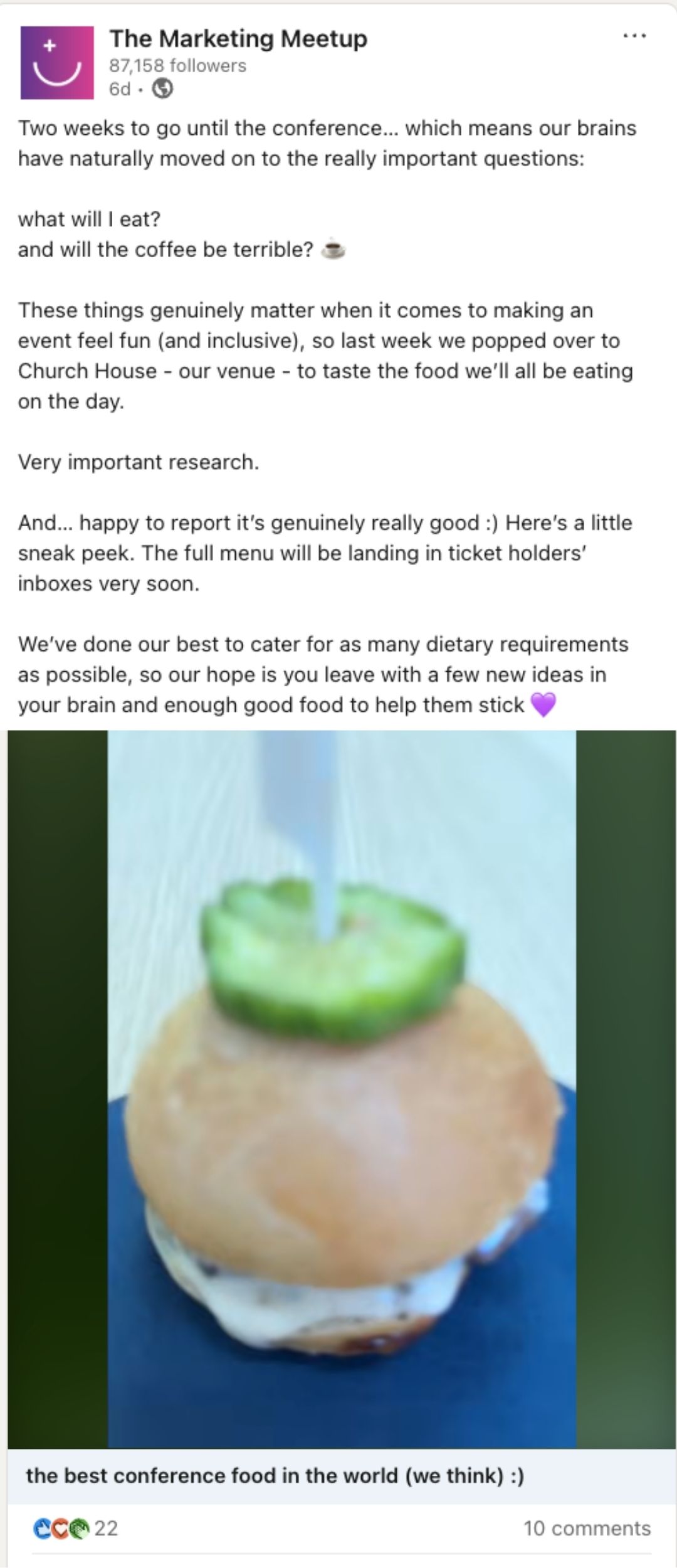
Below is a great example of organic social media content comes from the brilliant team at The Marketing Meetup.
Shared on LinkedIn ahead of their annual conference, the focus isn’t on selling tickets. Instead, it gives audiences a behind-the-scenes look at something many attendees genuinely care about: the food.
The value of organic social media for event marketing
Organic social media helps build long-term relationships with your audience. For event marketing, the advantages are:
Builds trust with your audience: sharing ideas, perspectives, and insights in an authentic way builds familiarity and helps establish credibility over time.
Supports community engagement: comments, shares and discussions allow audiences to interact with your brand, strengthening connections and increasing interest in upcoming events.
PRO TIP: Consistency matters
Social platforms reward consistent behaviour. Regular posting helps algorithms understand who your audience is and what type of content they engage with.
When accounts disappear between events and suddenly return with a registration announcement, posts often struggle to gain traction because the platform has lost those engagement signals.
Consistent organic content keeps your brand visible, strengthens relationships with your audience, and ensures that when event promotion begins, there is already momentum behind it.
The limitations of organic social media
Organic social media isn’t without limitations.
Most platforms now prioritise paid content in their algorithms, meaning organic posts are often shown to only a small percentage of followers.
According to Hootsuite’s Social Media Trends research, declining organic reach has become one of the biggest challenges facing brands using social media for marketing.
Organic content remains essential for building trust, but relying on it alone can make it harder to consistently reach new audiences.
What are paid social ads?
Paid social media refers to sponsored or promoted content that organisations pay to distribute to targeted audiences.
This can include:
- Boosted social media posts
- Targeted ad campaigns
- Sponsored event promotions
While organic social builds relationships, paid advertising can significantly accelerate visibility.
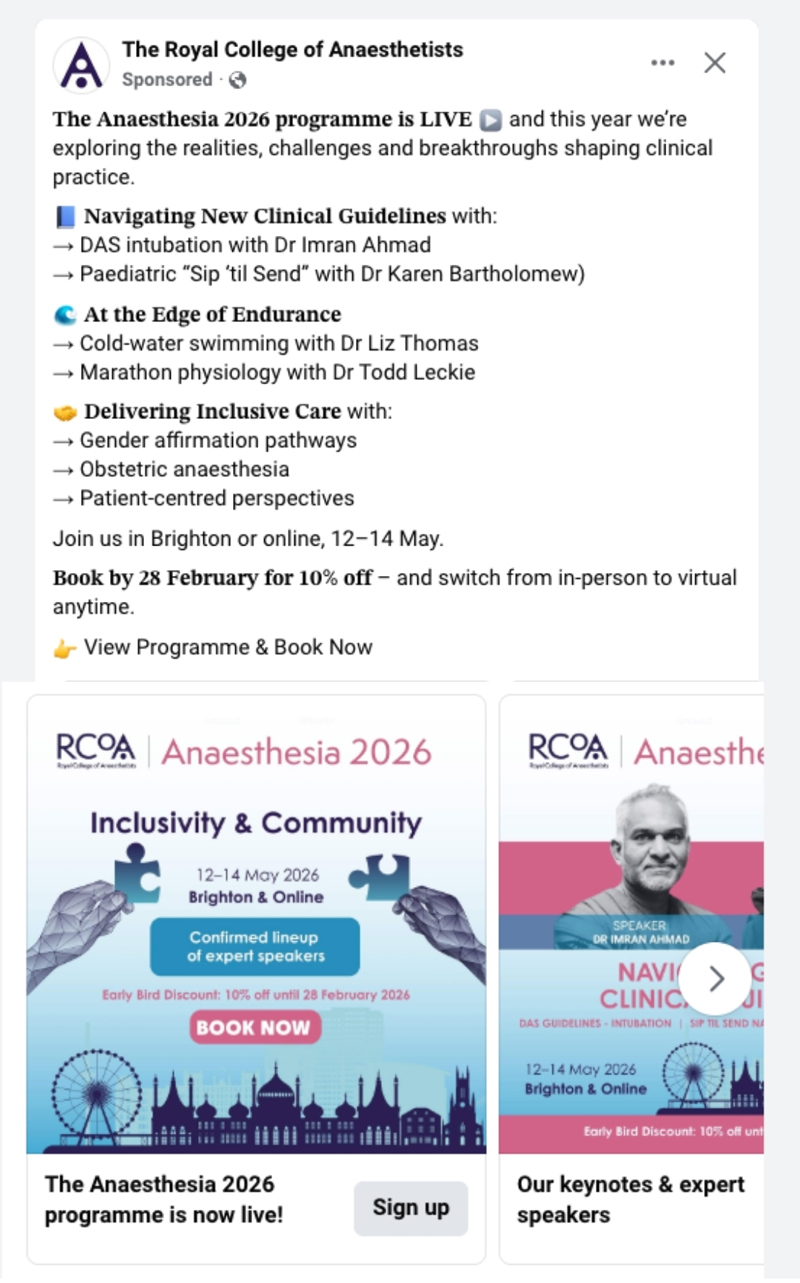
Below is an example from a recent Meta paid social campaign we ran for the Royal College of Anaesthetists’ Annual Anaesthesia Conference.
Targeted advertising on LinkedIn and Meta helped expand the event’s reach to healthcare professionals beyond the College’s existing network.
The value of paid ads for event marketing
Platforms like LinkedIn, Facebook and Instagram allow marketers to target specific audiences based on job roles, industries, behaviours and interests.
This makes paid campaigns particularly effective when the goal is to:
- Increase event registrations
- Generate event leads
- Reach niche professional audiences
- Promote time-sensitive events
Paid campaigns also offer something organic content often struggles with: clearer ROI measurement.
Every click, conversion and registration can be tracked, allowing marketing teams to see exactly how much they spent to acquire each lead or attendee.
According to HubSpot’s State of Marketing report, paid social media continues to be one of the most effective channels for driving website traffic and conversions.
This level of data makes paid campaigns especially valuable for teams who need to justify budgets through event marketing metrics and event ROI measurement.
The challenges of paid ads
Despite its advantages, paid social media isn’t a perfect solution either.
One of the biggest challenges marketers face is ad fatigue.
As audiences are exposed to more sponsored content, they often become less responsive to advertising messages over time. When users repeatedly see the same advert, engagement rates often decline.
In other words, the very thing that makes paid advertising powerful — repeated visibility — can also reduce its effectiveness if campaigns are not refreshed regularly.
This is why successful paid campaigns often require:
- Frequent creative updates
- Ongoing optimisation
- Testing different messages and formats
Paid advertising works best when supported by organic content that builds credibility and trust around the event.
PRO TIP: Keep an active social presence
Paid campaigns can still drive registrations for organisations with limited organic activity.
However, ads often perform more efficiently when supported by an active social presence, engaged followers, and a clearly defined audience.
Without those foundations, paid campaigns may need higher investment to achieve the same results.
Organic social media vs paid ads: Why the best strategies use both
Rather than asking “organic vs paid,” successful event marketing strategies ask a better question: How can these channels support each other?
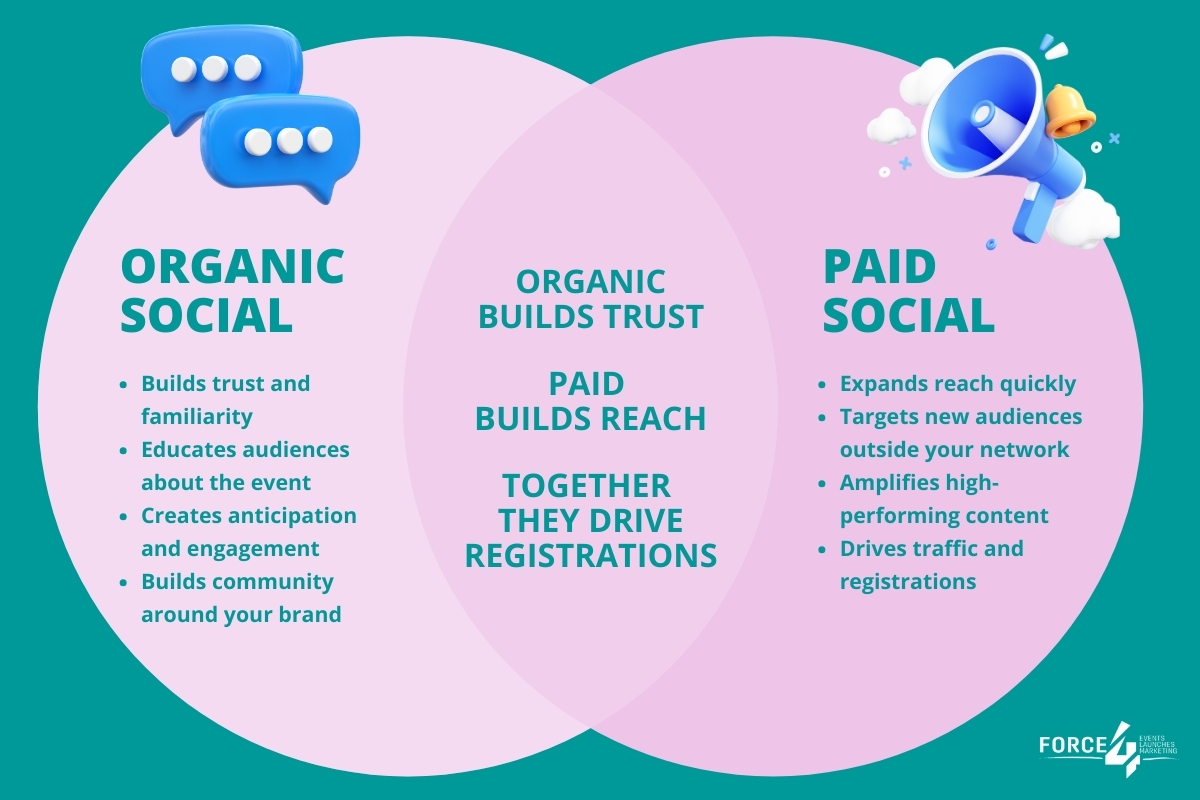
Organic content builds familiarity and trust.
Paid advertising expands reach and accelerates visibility.
When used together, they create a more effective funnel for event lead generation.
For example:
Organic social
- Builds community and credibility
- Educates audiences about your event
- Creates anticipation and engagement
Paid ads
- Amplify high-performing organic content
- Reach new audiences outside your follower base
- Drive traffic and conversions
Research from EventMB highlights that multi-channel promotion is one of the most important factors in successful event marketing campaigns.
Instead of choosing one channel over the other, the most effective campaigns use each one for what it does best.
Choosing the right approach for your event
Marketing teams rarely have unlimited time or budget. If you’re deciding where to focus your efforts, start by asking a few simple questions.
How established is your organic audience? If your community is engaged, organic content may already be driving registrations.
How niche is your audience? Highly targeted audiences often respond well to paid campaigns with precise targeting.
How soon is the event? Organic growth takes time. Paid advertising can accelerate visibility when timelines are tight.
What outcomes are you measuring? Your promotion strategy should align with your event ROI measurement framework. The goal isn’t just visibility, it’s bringing the right people into the room.
Conclusion
Organic social media and paid advertising both play important roles in event promotion.
Organic social media helps build relationships and strengthen community engagement over time. Paid advertising provides the targeting and scale needed to reach new audiences, drive registrations within specific timeframes, and deliver measurable event ROI.
Together, they support a stronger event conversion strategy, helping marketing teams deliver:
- Higher quality event lead generation
- Better event audience engagement
- Increased registrations from the right audience
- Clearer event ROI measurement
Planning an Event Campaign?
If you’re planning a conference or professional event and want to explore how paid social media could support your event registration and audience growth strategy, the Force 4 Events team can help.
FAQ: Social media for event marketing
How early should you start promoting an event on social media?
Event promotion should ideally begin several months before the event. Starting early allows organic content to build awareness and engagement, while paid advertising can later amplify reach and drive registrations as the event approaches.
Why is organic social media important for event marketing?
Organic social media helps build familiarity and trust with your audience over time. It creates a foundation for event promotion by keeping your brand visible and encouraging ongoing conversations with potential attendees.
How can paid social media help increase event registrations?
Paid campaigns can quickly expand visibility beyond existing followers. By targeting relevant audiences and linking ads directly to registration pages, marketers can drive traffic and increase event registrations more efficiently.
Which platform works best for event promotion?
LinkedIn often performs well for professional events and conferences, while platforms like Facebook and Instagram can deliver broader reach depending on the audience.
Love what you’re reading? Let’s connect on LinkedIn
Ready to plan your next impactful event? Let’s talk about how we can help you increase registrations, generate leads and build events that truly matter.
Five event marketing mistakes small businesses make. And the simple fixes
Hosting an event as a small business can feel like a leap of faith. You’ve invested in the...
Is your event attracting the right audience? Here’s how to tell.
You’ve poured time, energy, and budget into your event. The speakers are confirmed, the agenda is...
Event ROI: How to measure success beyond attendance
It’s Not Just About the Headcount You filled the room. Great. However did it work? It’s easy to...