It’s a Monday morning, the post-event report is due in an hour, and your leadership team is scanning two dashboards. One shows attendance numbers. The other tracks leads generated.
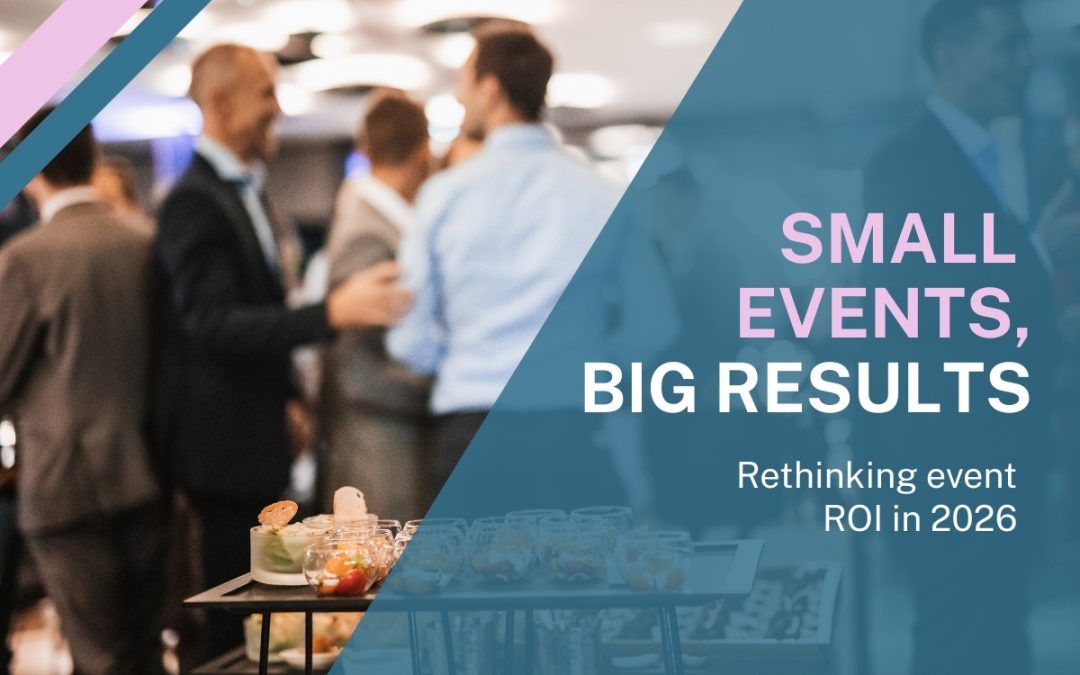
The tension is familiar, especially when the event in question wasn’t a headline-grabbing conference, but a smaller, more focused gathering.
And in 2026, the evidence is pointing in the same direction.
Industry research increasingly shows that highly targeted, purpose-led events are delivering stronger engagement, higher-quality leads, and clearer ROI than large, broad-reach formats.
Big events absolutely have their place. They can generate visibility and a sense of momentum. But when budgets tighten and teams are asked to clearly explain what an event actually delivered, those bigger formats often expose a weak spot: it’s harder to see what really worked, who it worked on, and what moved the needle afterwards.
That challenge is more common than many teams would like to admit. Research shows that only 36% of marketers feel confident they can accurately measure ROI across channels, making it difficult to connect event activity to real business outcomes. When success is tied mainly to headcount or footfall, the story quickly starts to unravel once deeper questions are asked.
(Source: Marketing Evolution – Marketing ROI Statistics)
This is where smaller, more focused events tend to shine.
With a clearly defined audience and fewer moving parts, event ROI measurement becomes far more intuitive. It’s easier to see where registrations came from, which conversations mattered, and how engagement translated into next steps
What defines a “small but mighty event”?
When we say small at Force 4 Events, we’re not talking underpowered or minor. We’re talking intentional, focused, and purpose-driven.
A small but mighty event typically has:
- A clear business outcome (e.g., event lead generation or conversion strategy)
- A targeted audience. Not everyone, but the right people
- Measurable checkpoints from pre-event buzz to post-event value
This approach isn’t about doing less. It’s about doing smarter, more strategic event marketing. Where every decision has a purpose and every outcome can be explained.

Why small events drive bigger ROI
Engagement isn’t a buzzword. It’s one of the strongest indicators of event effectiveness.
Data continues to show that events remain one of the most effective channels for B2B lead generation, particularly when the audience is well-defined, and the experience is designed around interaction rather than scale.
(Source: HubSpot – The Ultimate Guide to Event Marketing)
In smaller settings, you’re more likely to:
- Have deeper conversations that convert into real leads
- Track engagement via QR codes, live polls, or session attendance
- Understand attendee behaviour, not just headcount
That depth of insight fuels stronger event audience engagement strategies and creates a far more accurate picture of ROI.
Measuring ROI beyond registrations and revenue
Traditional ROI metrics like revenue or registrations are only part of the story. Modern event ROI looks at influence, intent and momentum, not just immediate returns:
Today this includes:
- Lead quality, not just lead quantity
- Behavioural engagement, such as sessions attended or content consumed
- Post-event conversion indicators, including follow-up actions and pipeline movement
More than 60% of event professionals now say engagement and business outcomes matter more than attendance when evaluating event success, highlighting a clear shift away from vanity metrics.
READ: EVENT ROI: How to measure success beyond attendance which breaks down the essentials of event marketing and includes and downloadable Pre-event Marketing Guide.
How to measure success beyond the headcount
If size isn’t the goal, then what metrics actually matter?
When you’re working with a smaller, more focused event, success becomes easier to define and easier to track. You don’t need complex dashboards or layers of reporting. You need a handful of metrics that clearly show whether the event did what it was designed to do.
Here’s a practical framework you can use at your next small event to measure what really matters.
Before the event
Conversion rate on event registrations : Are the right people responding to your messaging, or are you relying on volume to fill the room?
Audience quality and relevance : Not just who signed up, but why. Are attendees aligned with the purpose of the event?
During the event
This is where intent turns into engagement.
Session attendance vs. capacity : Which moments genuinely held attention, and which ones didn’t?
Live engagement: Questions asked, polls completed, conversations started. These signals matter far more than passive presence.
After the event
This is where real impact shows up.
Lead quality and pipeline progression : Did the event move relationships forward, or simply add names to a list?
Content engagement : Are people revisiting what they learned through recap downloads or session replays?
Attendee feedback and sentiment : Not just satisfaction scores, but whether the event delivered on its promise.
Small events, big results – what this means for 2026
Together, these metrics create a much clearer picture of performance. One that connects activity to outcomes and makes event ROI measurement feel practical, not theoretical.
In 2026, event marketing isn’t about how many show up. It’s about what happens because they did.
Small, strategic events, when measured thoughtfully, can outperform larger, unfocused gatherings in real business outcomes like:
- Increased event registrations from targeted audiences
- Richer event lead generation and pipeline growth
- Stronger event audience engagement
- Meaningful data that fuels smarter decisions
They bring clarity to event ROI measurement, helping marketing teams prove value to leadership without fuzzy dashboards or guesswork.
If you’re ready to move beyond vanity numbers and build events that deliver measurable impact, start with strategy and measure what matters.
Love what you’re reading? Let’s connect on LinkedIn
Ready to plan your next impactful event? Let’s talk about how we can help you increase registrations, generate leads and build events that truly matter.
Why Collaborative Event Marketing Could Be Your Team’s Best Move Yet.
Too busy to do it all? You know the feeling. You’ve got an event to market and 150 seats to fill....
When is it time to outsource your event marketing?
You’re juggling so many moving parts: email funnels, social campaigns, design assets, sponsor...

The essential guide to pre-event marketing for small business events
Events are powerful. They build community, spark conversations, and create lasting impact. But...